
Fishing Cars Out of Trouble
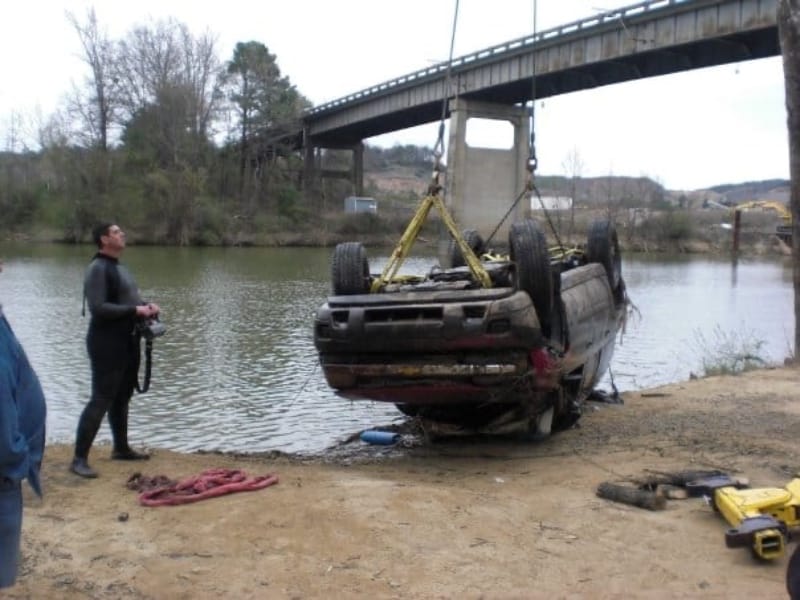
When a car ends up in the water, the job stops being a normal tow and turns into a controlled lift with a lot more variables. In Birmingham water recovery, we treat the water as the biggest moving part on the scene because current, depth, and visibility can change our plan fast. Our towing team starts by looking at access points, bank stability, and what the vehicle might be tangled in below the surface. We also think about fluids, debris, and how to keep bystanders away from hazards that are easy to miss when the problem sits partly underwater.
The First Minutes: Stabilize and Assess
We set boundaries early and keep the scene calm, because rushed steps create bigger problems underwater. We identify the safest staging area for our trucks and gear, then we check the waterline, entry angle, and any overhead obstacles. We also coordinate with local responders so everyone works from the same plan.
Keeping the Scene Clean
Water makes small leaks spread farther than people expect. We keep absorbents and containment options ready, and we watch for sheen, battery issues, and loose cargo drifting away. If the vehicle carried anything that could float or spill, we account for it before we start moving hardware.
Our Gear, and Why Each Piece Matters
Submerged recoveries call for tools that lift smoothly and hold steady when visibility drops. We bring equipment that lets us control force, direction, and pace, because a vehicle can shift suddenly once it breaks suction or clears an underwater snag.
We also match the gear to the conditions instead of forcing a single method. Here are a few pieces we rely on and what they help us do:
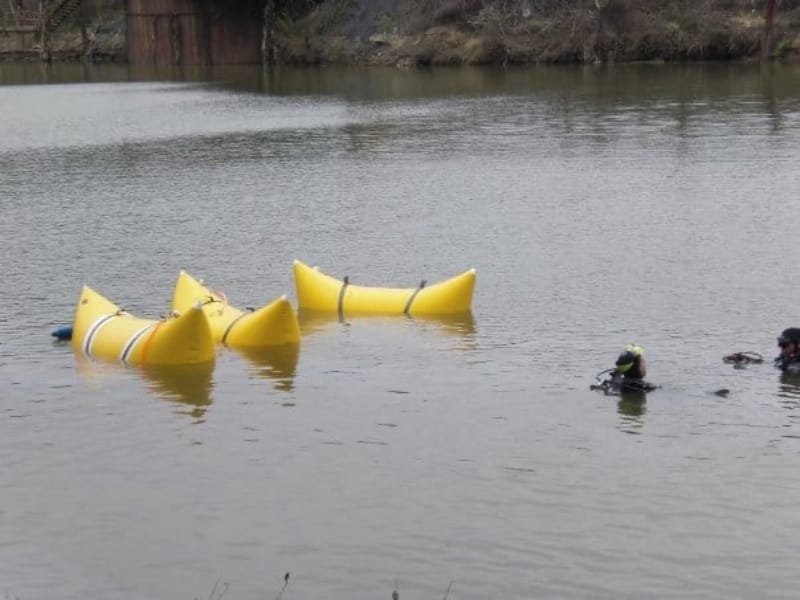
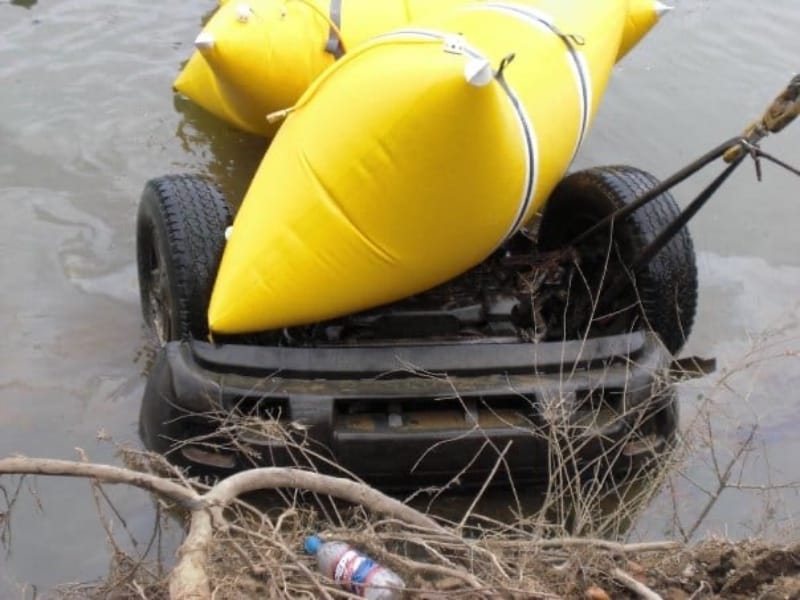
- Air cushions to add lift gradually without jolting the vehicle
- Divers to confirm attachment points and clear hazards we cannot see from shore
- Rotators to lift, swing, and place the load with control
- Support equipment and crew coordination to keep lines managed and the scene organized
Air Cushions for Lift Without Shock
Air cushions give us a gentle way to change buoyancy and reduce the load on rigging. We place them with intention so the vehicle rises level instead of twisting. That steadier lift helps protect the vehicle structure and keeps our lines from taking sudden spikes in tension.
Divers as Our Eyes and Hands
Divers help us verify what the vehicle is resting on and where we can attach safely. They can clear weeds, straps, or debris that wrap around axles and suspension parts. They also confirm that our rigging sits correctly before we commit to the pull.
Step by Step, From Contact to Extraction
Once we confirm conditions, we build a plan that keeps the pull controlled and predictable. We aim for steady movement, clear communication, and clean rigging, because water hides the little problems that turn into big ones.
We set anchor points, manage traffic and pedestrians, and stage equipment so the workflow stays smooth. We also keep the extraction path simple, because dragging a vehicle across uneven banks can create surprises that we would rather avoid.
Rigging with Rotators and Control Lines
A rotator gives us lift and placement control that fits Birmingham water recovery work well. We choose attachment points that can handle the load, then we add control lines to guide the vehicle as it comes up. That guidance matters, because once the vehicle clears the bottom, it can swing toward the bank or roll in a way that stresses the rigging.
After the Pull: Drain, Secure, Document
After extraction, we pause to let water drain and to check that the load sits stable before moving it. For Birmingham water recovery, we keep the work area tidy and we secure loose parts that can fall off during transport. We also document the recovery setup and condition of the vehicle as part of doing the job responsibly.
Below the Surface of Birmingham Water Recovery with Weil Wrecker Service
At Weil Wrecker Service, we approach Birmingham water recovery with a method that favors control over speed. We use divers for underwater confirmation, air cushions when lift needs to stay gentle, and rotators when placement and stability matter most.
We also handle the practical next steps after Birmingham water recovery work, including loading, transport, and coordination with the owner or responding agencies. Weil Wrecker Service provides towing and recovery support with the equipment and crew needed for Birmingham water recovery, and we keep our focus on clear planning, careful lifting, and a clean scene from start to finish.
FAQ
What should I do first if my vehicle ends up in water?
Get yourself and passengers to a safe spot away from the edge, then call emergency services if anyone is at risk. After that, keep people back from the shoreline and avoid trying to pull the vehicle out with a personal truck or a strap. A controlled recovery reduces the chance of the vehicle shifting, rolling, or snagging.
Is it safe to try to retrieve a submerged vehicle with a winch or tow strap?
It can be dangerous without the right setup. Improper angles and sudden tension changes can cause lines to snap or the vehicle to move unpredictably. Water adds hidden resistance and suction, so a methodical lift plan beats a quick pull every time.
Why do recovery teams use divers during water recoveries?
Divers confirm what the vehicle is resting on, where it is snagged, and which attachment points are secure. They also help clear debris from axles or suspension areas so the lift stays controlled. That underwater check prevents guesswork from turning into a problem on the surface.
What are air cushions used for in vehicle recovery?
Air cushions help add lift gradually and reduce the force needed to free a vehicle from mud or suction. They can help keep the vehicle more level as it rises, which lowers the chance of sudden rolling. Crews use them when a gentle change in buoyancy will make the recovery smoother.
What does a rotator truck do that a standard tow truck cannot?
A rotator can lift and swing a load with more control, which helps place a vehicle onto stable ground or a transport position without abrupt movement. That extra range of motion matters when access is tight or the shoreline is uneven. It also supports controlled rigging angles during the lift.
After recovery, can the vehicle be started or moved under its own power?
Do not try to start it. Water intrusion can damage the engine, electrical systems, and safety components, and starting it can make that damage worse. The safer next step is transport, inspection, and guidance from a qualified mechanic or insurer.